
Carrying It Doesn’t Mean Carrying It Alone
Roots Before the Board
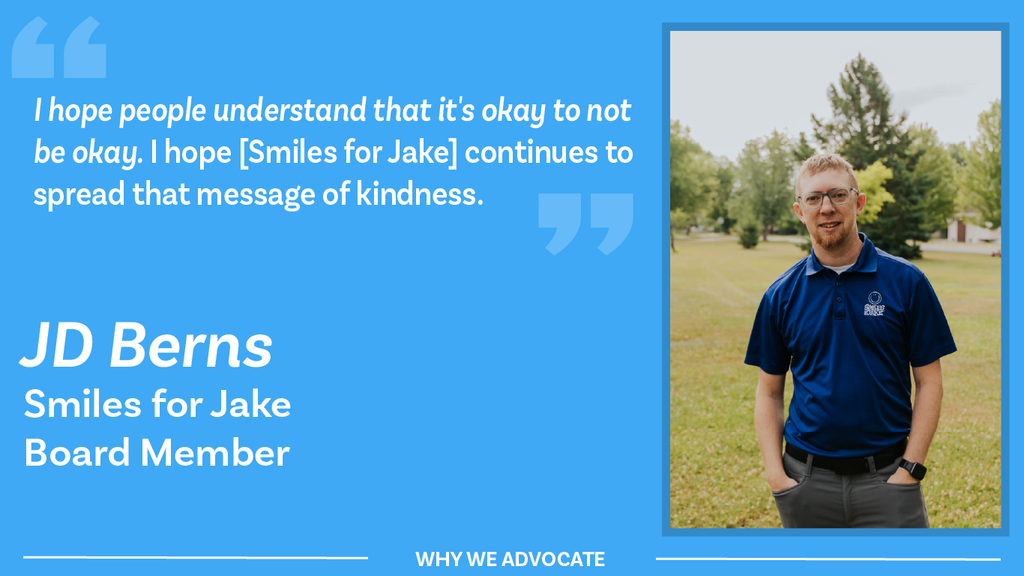
I’m JD Berns. I work at Hubbard Radio here in Brainerd. My connection to Smiles for Jake goes back a lot further than my seat on the board.
I’ve known Jake’s family most of my life. My grandpa and Jon Haapajoki – Jake’s Grandpa – were great friends. Both of our families just kind of took the same path of serving the community, and I wanted to give back however I could once I had the chance. I grew up tagging along to volunteer opportunities as a kid. It’s just always been part of how I was raised.
What “We Are All Jake” Means to Me
“We Are All Jake” hits home for me in a simple way. Everyone is Jake. Everyone is the same. We all experience the same range of emotions moving through us, whether we knew him personally or not. The question isn’t whether you knew Jake—it’s how we prepare ourselves, our kids, our families, to deal with that range of emotions life is going to throw at every single one of us.
Why I Finally Joined
I joined the board about two years ago. I’d been following Smiles for Jake for a while before that, and honestly, what pushed me to finally join was my own story. I’ve dealt with my own mental health struggles over the years, and I knew there was more work to do. I wanted to make sure other people knew the resources were out there—that there was education, there were ways to overcome things, if you just knew where to look.
Learning to Carry It
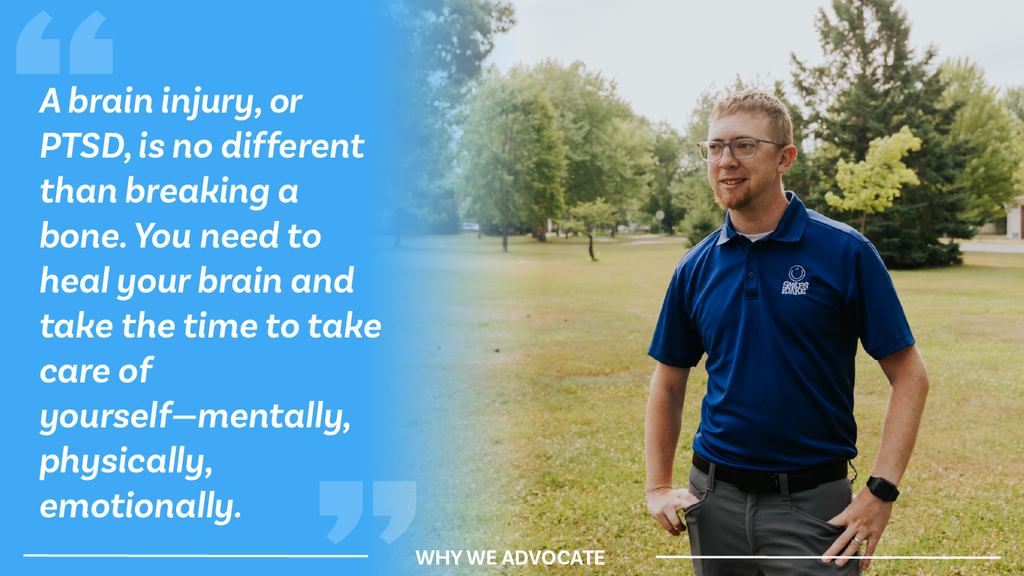
For a long time, I was afraid to tell people I have PTSD. I honestly don’t fully know why. It comes from a whole range of things—when I was younger, I was involved in different public safety avenues. I thought that was going to be my career. But you see things. You experience things. And as guys, we don’t always deal with things right away either.
I worked crash response on a fire rescue crew. You go through a whole range of emotions—seeing it, responding to it, dealing with it, and then living with the aftermath. And then you go right back and do it all over again the next shift.
Once I finally accepted that what I have isn’t going to go away, that changed everything for me. You learn to live with it. It’s just who you are now, and that’s okay. It doesn’t make you a lesser person. You just have to learn how to carry it in a way that lets you live your happiest life.
Becoming Vulnerable
I haven’t always been this open. Not even close.
What changed things for me was accepting that this part of me wasn’t going away, and that I needed a support team around me—people who accept you for who you are, who remind you that you’re still the same person you always were. Having something doesn’t make you different. It just makes you human.
I know there are a lot of men out there who don’t talk about their emotions at all. If I could say one thing to them, it’s this: society tends to bury things. We don’t want to talk about our feelings because it makes us feel vulnerable. But you need to deal with your emotions. You need to let them out, even when it’s scary in the moment—because it will make you feel better. The world is changing so fast now, and if we don’t deal with things as they come, even a day or two later so much has already changed. It becomes too late to process something that happened last week. Deal with it in the moment. Say how you feel instead of letting it eat at you from the inside.
Paint the Town Blue
I’m married, and I have a seven-year-old daughter.
Being part of Smiles for Jake has absolutely made me more likely to have those conversations with her than I would have been otherwise. Every year, on the anniversary, we paint the town blue together. I make sure she comes with me to paint a smiley face in the snowbank. She doesn’t understand all of it yet—she’s seven—but she understands that smiley faces make her happy, and that it’s something we do as a family. That’s exactly where we need to start. Age-appropriate conversations, a little bit of information at a time, building on it as she grows.
If a family is struggling with how to even start that conversation, my advice is simple: ask for help. Call 988. They can walk you through a tough conversation, step by step, if you don’t know how to tell your child about something hard that’s happened. Ask your friends and family—chances are someone close to you has been through something similar. Don’t go through it alone. There are so many people, and so many organizations, ready to help you carry it.
Calling Out What’s Not Okay
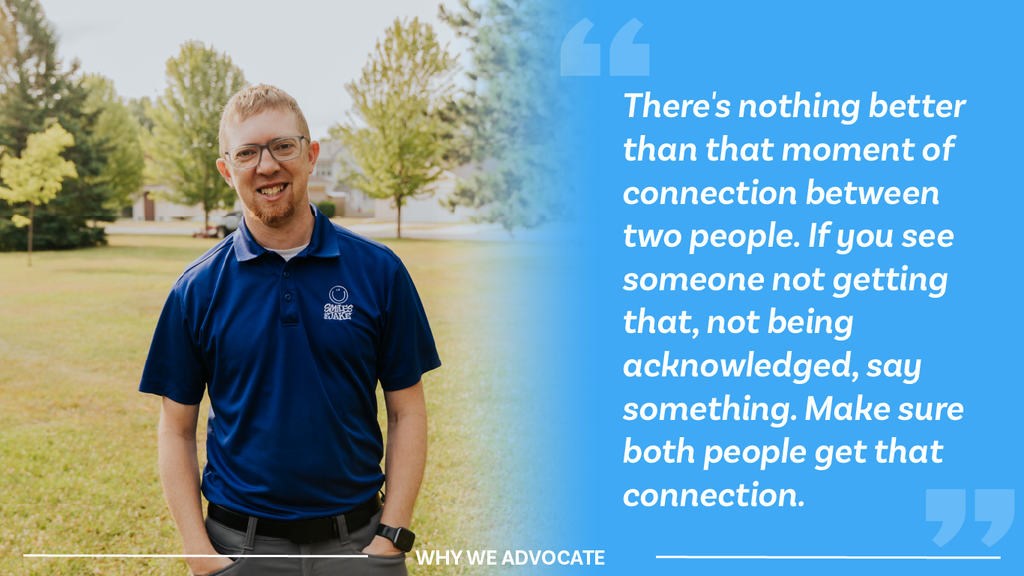
One of my favorite parts of this work is honestly the simplest: our pop-up kindness events. Anytime you can go out and just put a smile on someone’s face—give out high fives, spread some happy emotion into a room—that’s what we need more of. If someone sees me walk by and I don’t give them a high five, I tell people: call me out on it. There’s nothing better than that moment of connection between two people. If you see someone not getting that, not being acknowledged, say something. Make sure both people get that connection.
Bullying is never good, but a lot of bullies don’t even realize they’re doing it. They’ve usually learned it from somewhere—from society, honestly. Changing that is going to take a huge shift, and it’s not just schools, or just parents, or just social media, or just government. It’s systemic. It’s everything, together.
What I tell people is: if you see it, call it out. Let someone know that what they said isn’t okay. And on the flip side, if something someone says offends you, it’s worth asking yourself why it offends you—not to excuse the other person, but to understand your own reaction. There’s a difference between “I don’t like your shoes,” which isn’t very kind but is just an opinion, and something cruel. Kids need to know it’s okay for people to have different opinions. Not everyone is going to like the same things you do, and that’s fine—as long as nobody’s being mean about it.
It’s so much harder now, too, because kids have phones in their hands, and people say things online they’d never say to your face. If we could somehow get back to more face-to-face conversation, I think we’d all be better for it. When people hide behind a screen, they’re more willing to say things they’d be afraid to say out loud—and it often hurts worse, not less, even though it doesn’t feel that way to the person typing it.
Put the phones down. Have a game night. Sit at dinner and actually talk—don’t eat with your phone in one hand and your fork in the other. Ask your family how their day went, and really listen to the answer. That face-to-face connection is where all of this starts.
How You Can Help
Outside of the board, the biggest thing anyone can do is simple: spread the message, spread kindness. If we can create another wave of high fives, of smiles, of just genuine happiness moving through this community, it helps everyone. That’s really it. That’s the whole ask.
Smile on,
JD
If you or someone you know is struggling, please reach out. It’s okay to not be okay, and you don’t have to carry it alone. Support Smiles for Jake’s mission by donating, volunteering, or bringing a SMILE Advocate Session to your school or business.